Mission & Goals
Science-guided restoration rooted in 200 years of ecological history
Our Mission
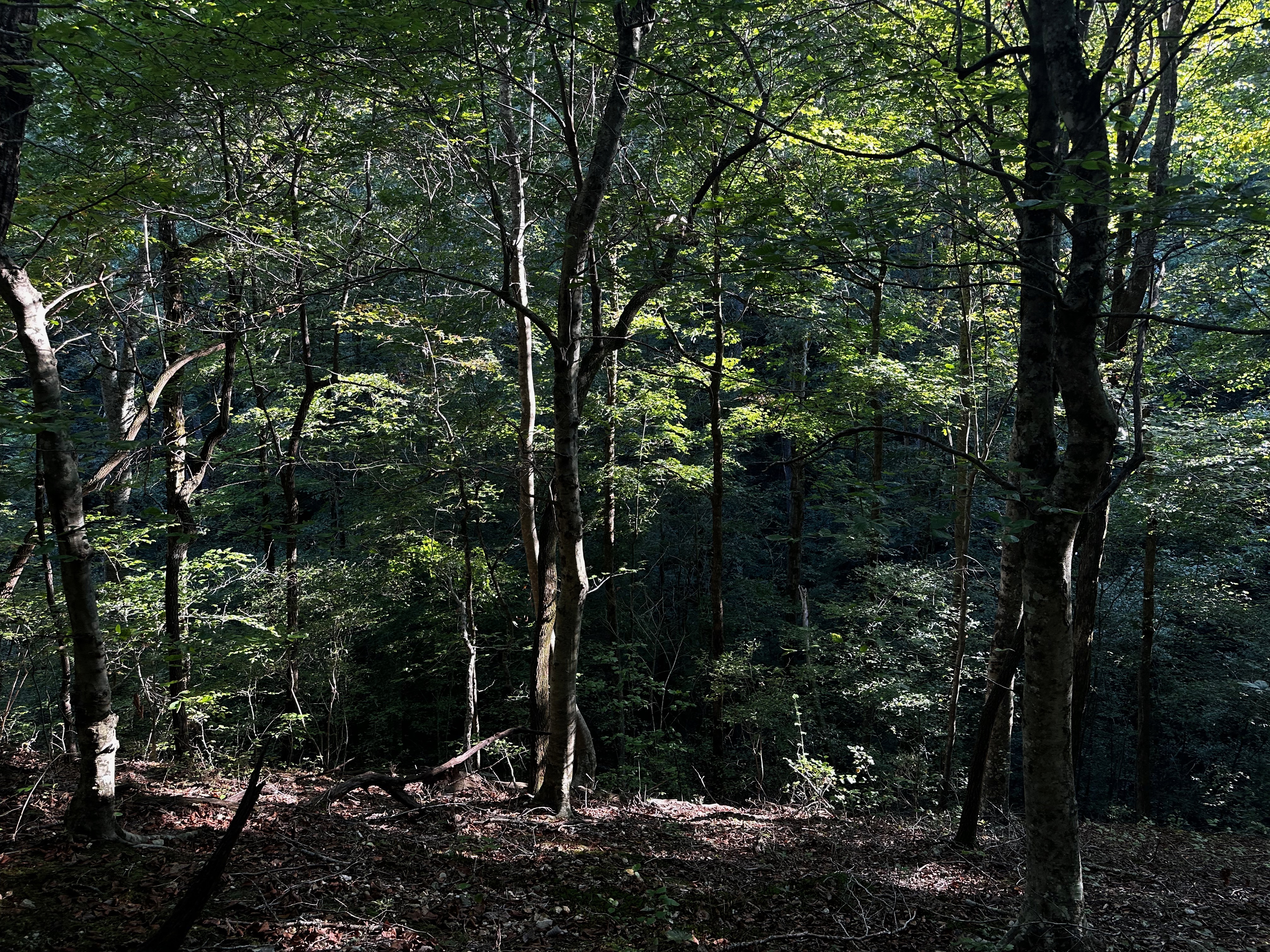
Untangled Roots is a Middle Tennessee research project dedicated to the conservation, restoration, and cultivation of American ginseng.
Over the past several years, we have developed high-resolution Habitat Suitability Models for American ginseng in Moore, Franklin, and Coffee Counties in Southern Middle Tennessee. These models were built from 140 known presence locations and incorporate environmental variables including precipitation, soil type, aspect, elevation, minimum temperature, canopy cover, distance to water, and digital elevation models. The result is parcel-scale maps that classify land as unsuitable, suitable, or highly suitable for wild or wild-simulated ginseng habitat.
The strategic opportunity is to use this unique geospatial dataset — and the expertise behind it — to build a mission-driven enterprise that improves forest health, creates resilient local income streams, and supports the long-term survival of American ginseng. Tennessee is already one of the leading sources of wild and wild-simulated ginseng in the United States, and agriculture and forestry account for a large share of economic activity in our region. A carefully designed model can help landowners shift from opportunistic digging toward planned, regenerative forest farming.
American ginseng is a climate-sensitive species. Southern Appalachian populations sit near the trailing edge of suitable habitat range. As temperatures and precipitation patterns shift, our habitat modeling helps identify populations and sites most likely to remain viable — making restoration efforts climate-smart from the start.
Habitat Suitability by County
Our models cover three counties in Southern Middle Tennessee, identifying over 90,000 acres of highly suitable ginseng habitat and nearly 380,000 acres of suitable land.
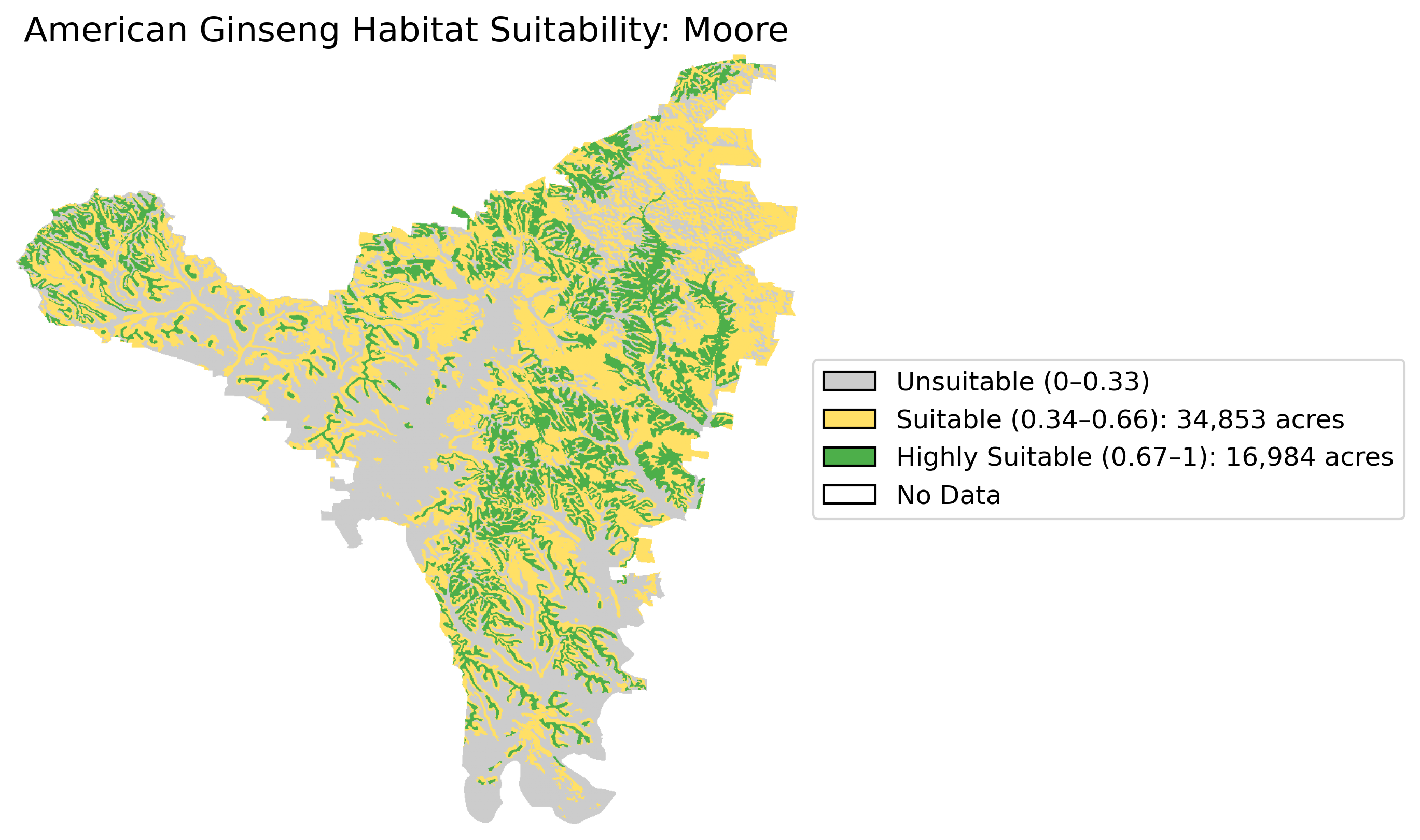
Moore County
16,984 highly suitable acres
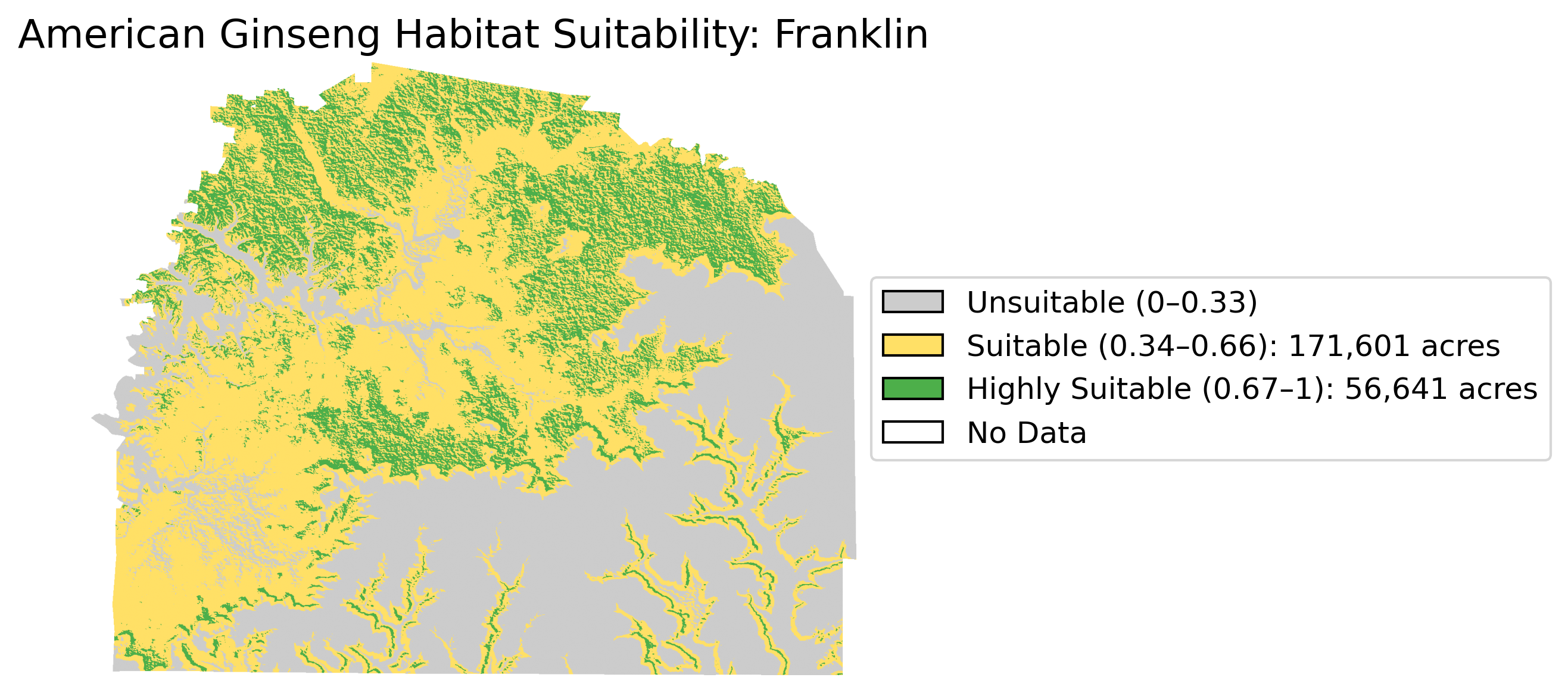
Franklin County
56,641 highly suitable acres
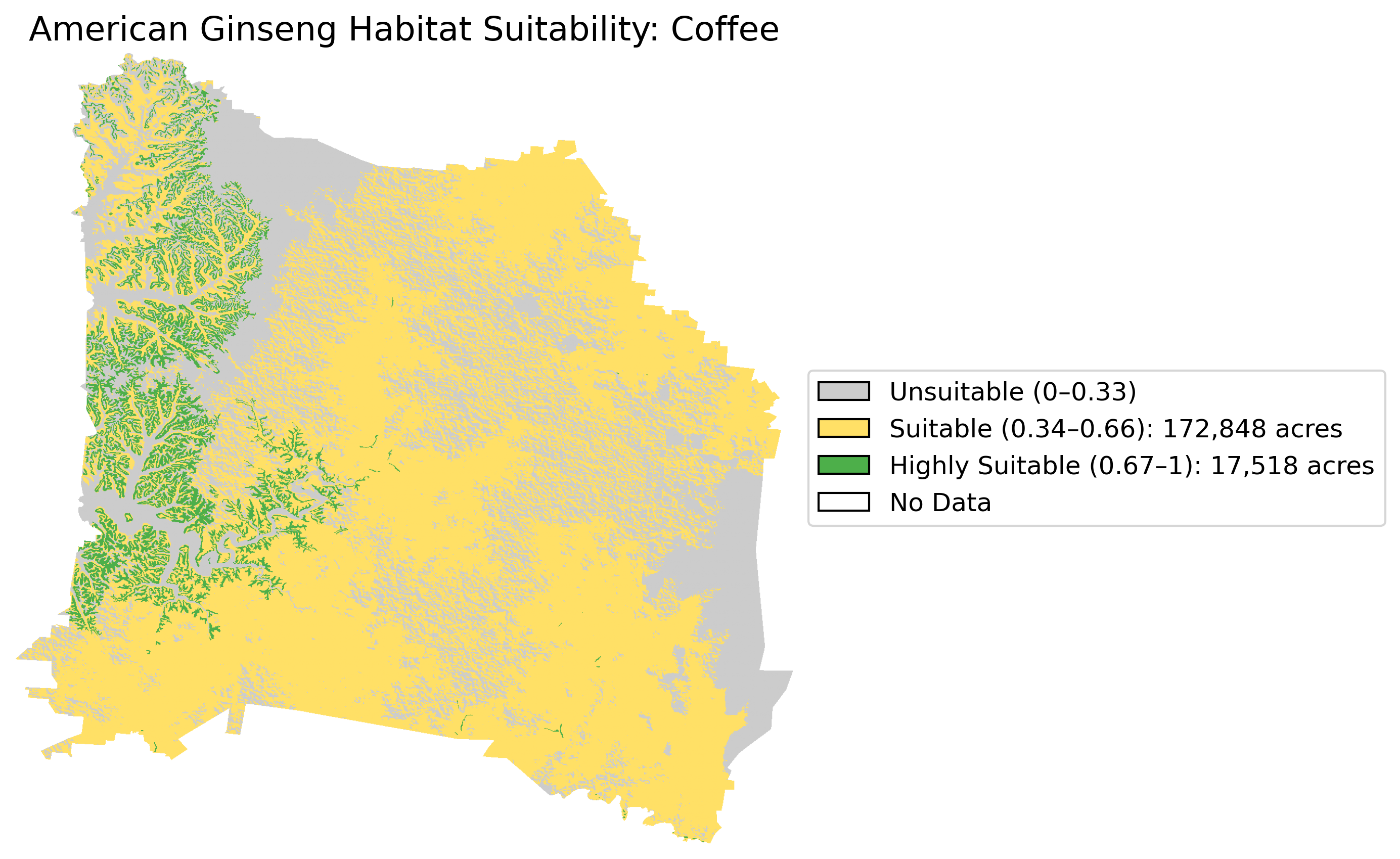
Coffee County
17,518 highly suitable acres
What We're Working Toward
Document the Gap
Quantify the disparity between ginseng populations on historically forested land versus formerly cleared parcels using GPS surveys and GIS analysis.
Map Restoration Potential
Build habitat suitability models identifying where slope, aspect, elevation, and canopy cover align for successful ginseng reintroduction.
Restore Native Populations
Partner with TVA and conservation agencies to reintroduce ginseng using locally adapted seed sources from healthy upstream populations.
Build Partnerships
Engage TVA, state wildlife agencies, universities, and local communities in a collaborative restoration framework for public land.
Advance Ecological Understanding
Contribute to the scientific understanding of mycorrhizal recovery, land use legacy effects, and forest understory restoration timelines.
Share the Story
Make the case publicly that historical ecology — the intersection of family history, land records, and environmental science — can guide modern conservation.
The Numbers
Ready to Help?
Whether you're a researcher, land manager, or someone who cares about these forests — we'd love to hear from you.
Get in Touch